A WhatsApp chatbot answers customer enquiries, confirms reservations, sends post-visit review invites, and routes complex requests to your staff. It runs 24/7 on the channel 87% of Singaporeans already use every day. For restaurant operators dealing with high message volumes during peak hours, it removes the bottleneck of one person trying to reply while also running the floor.
Why WhatsApp Is the Default Channel for Singapore F&B
WhatsApp messages see open rates above 90%, compared to roughly 20% for email. In Singapore, customers already message restaurants on WhatsApp to ask about menus, hours, dietary options, and table availability. The conversation is happening whether you set up automation or not.
The problem is scale. During a Friday dinner rush, a single staff member juggling walk-ins, phone calls, and 30 incoming WhatsApp messages will start dropping threads. Unanswered messages during peak hours often mean lost covers. A chatbot absorbs the repetitive portion of that load so your team handles only the conversations that genuinely need a human.
What a Restaurant WhatsApp Chatbot Handles Day to Day
Not every chatbot covers the same scope, but for a Singapore restaurant, these are the tasks that deliver the clearest return.
Menu and hours enquiries. The highest volume, lowest complexity messages. “Do you have vegetarian options?” “Are you open on public holidays?” “Where is your outlet?” A chatbot trained on your menu and business details answers these instantly, in English, Mandarin, or Malay, without staff lifting a finger.
Reservation enquiries. Customers message to ask about availability, group sizes, or private dining. A chatbot collects the details (date, time, party size, contact number) and either confirms directly or passes a formatted request to your reservations person. Automated confirmation messages reduce no-shows because the customer has actively engaged rather than just calling and forgetting.
After-hours responses. A customer browsing restaurants at 11pm for tomorrow’s lunch will message three places and book with whoever replies first. Without automation, that message sits unread until your next shift. A chatbot answers immediately, captures the booking intent, and your staff follows up in the morning with everything already in hand.
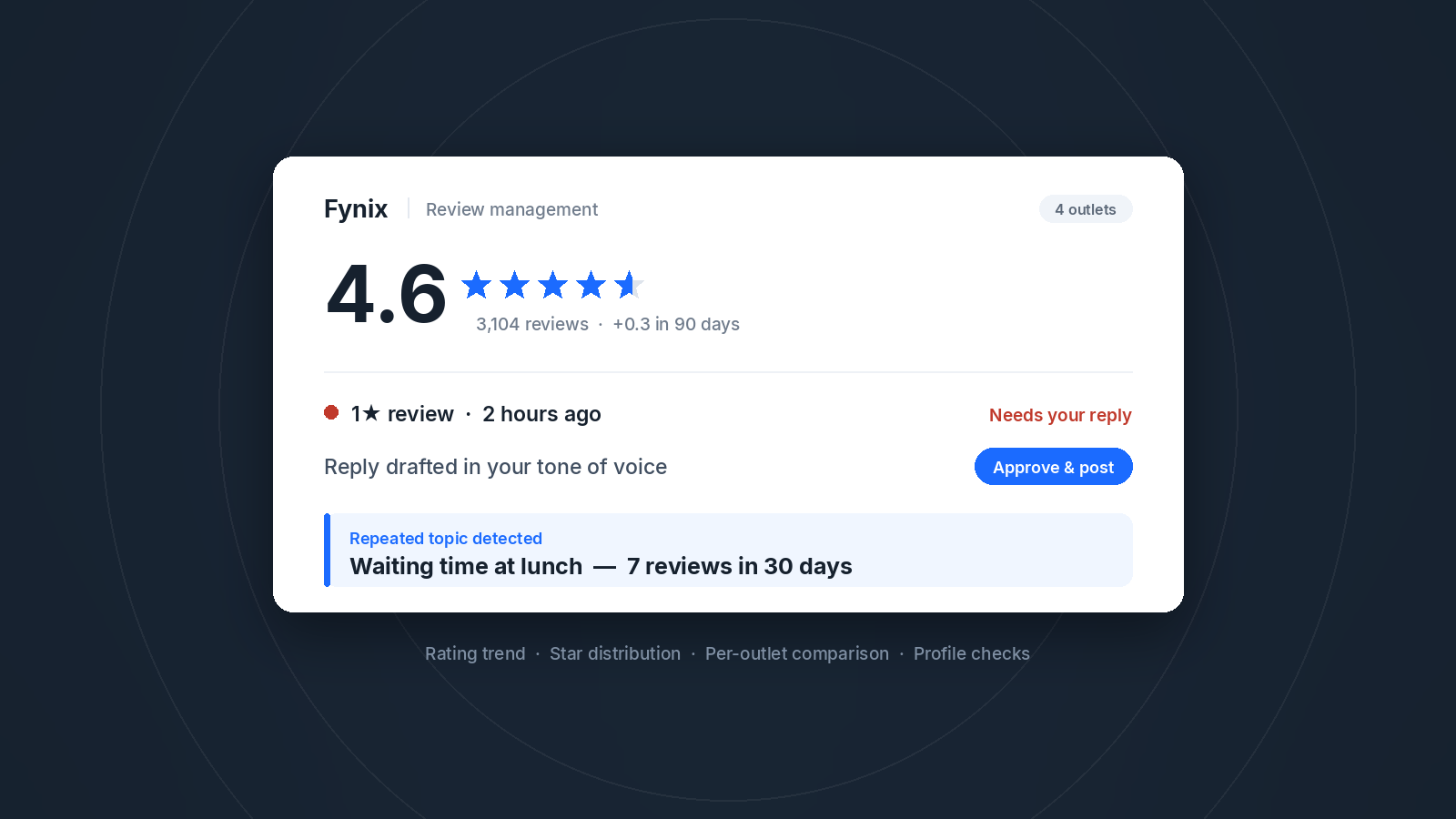
Post-visit review invites. Google reviews directly affect whether someone picks your restaurant over the one next door. Sending a WhatsApp message after a dine-in visit with a direct link to your Google Business Profile page is one of the most reliable ways to increase review volume. Doing it manually is tedious; automating it turns every satisfied customer into a potential reviewer without adding work for your team. For more on how review collection fits into a broader strategy, see our guide to Google review management.
Human handoff. Complaints, special event requests, and anything with emotional weight should go to a real person. A well-designed chatbot recognises when it is out of its depth and transfers the conversation to a staff member with the full chat history attached, so the customer never has to repeat themselves.
What to Look for When Choosing a WhatsApp Chatbot
The market has plenty of options, from basic auto-reply bots to AI-powered agents that understand intent. Here is what matters most for a restaurant in Singapore.
Multi-channel reach, not just WhatsApp. Your customers also message you on Instagram, Facebook, TikTok, and your website. A chatbot that only covers WhatsApp means you are still manually handling every other channel. Look for a solution that uses one knowledge base across all your messaging channels, so you train it once and it works everywhere. This is the core idea behind AI agents for local businesses.
Accurate answers, not scripted menus. Older chatbots force customers through rigid “press 1 for hours, press 2 for menu” flows. AI-powered chatbots read what the customer actually typed and respond in natural language. If someone asks “do you have anything gluten-free for kids,” it should be able to answer from your menu data, not redirect them to a PDF.
CRM integration. A chatbot that talks to your CRM means a returning customer gets recognised. Their visit history, preferences, and loyalty status are available to the bot and to your staff when a conversation is handed off. Without this, every interaction starts from scratch. If you are still evaluating CRM options, our guide on choosing an F&B CRM in Singapore covers what to prioritise.
PDPA compliance. Any automated WhatsApp message sent for marketing purposes requires the customer’s explicit consent under Singapore’s Personal Data Protection Act. Your chatbot provider should support proper opt-in collection and consent records. Sending promotional broadcasts without consent is not just bad practice; it is a legal risk.
Common Questions
Do I need the WhatsApp Business API or is the free app enough?
The free WhatsApp Business App works for a single outlet with low message volume. Once you need automation beyond basic auto-replies, team inbox access, or broadcast campaigns to more than a few hundred contacts, you need the API. Most chatbot providers handle the API setup for you.
Will a chatbot feel impersonal to my customers?
A message left unanswered for six hours feels more impersonal than an accurate, immediate automated reply. The goal is not to replace human interaction but to make sure every customer gets a response within seconds, even during your busiest service.
How long does it take to set up?
Setup time depends on the provider. Simple rule-based bots can go live in a day. AI-powered agents that learn from your menu, FAQ, and booking policies typically need a few days of training and testing before they are ready for customers.
Can a chatbot handle multiple languages?
AI-powered chatbots generally handle English, Mandarin, and Malay well. Some also manage code-switching, where a customer mixes languages in a single message. Test this with real customer messages before you go live, because marketing claims and actual performance are not always the same.
Next Step
If your restaurant is already getting WhatsApp enquiries and your team cannot keep up during peak hours, a chatbot is not a future investment; it is catching up to how your customers already want to reach you. Start by mapping the five most common questions your staff answers every day. That list is your chatbot’s first job.